Comparing Vibrotactile and Skin-Stretch Haptic Feedback for Conveying Spatial Information of Virtual Objects to Blind VR Users
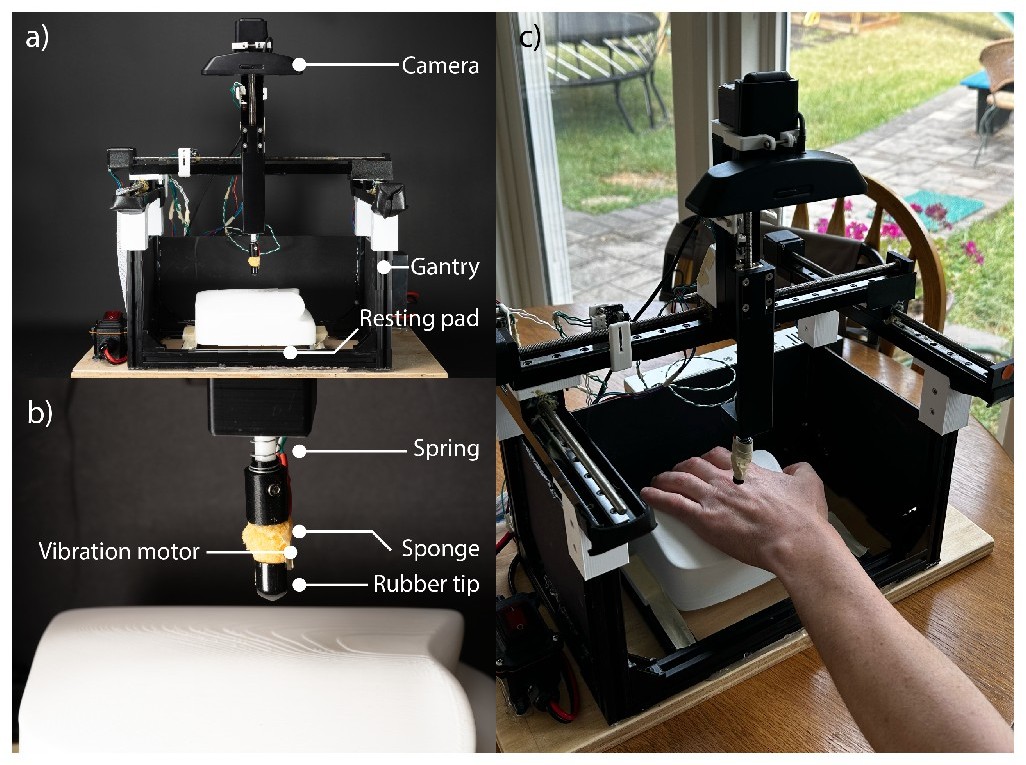
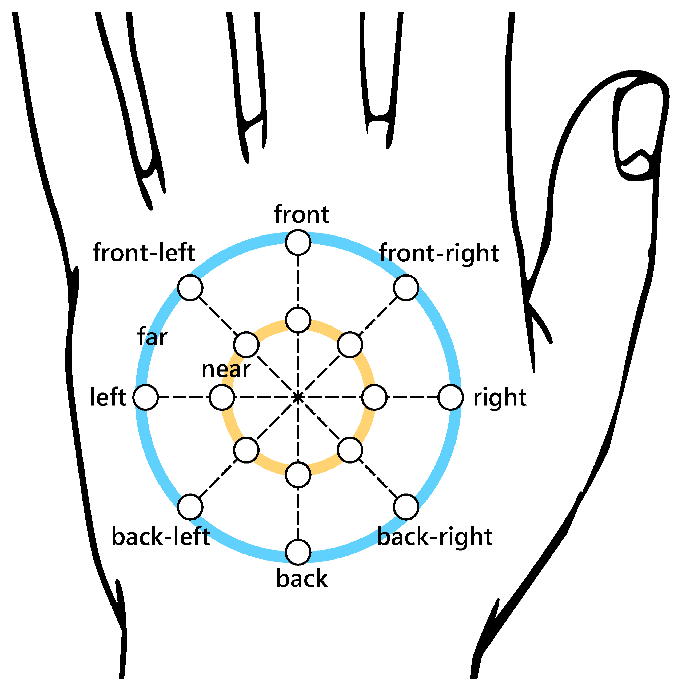
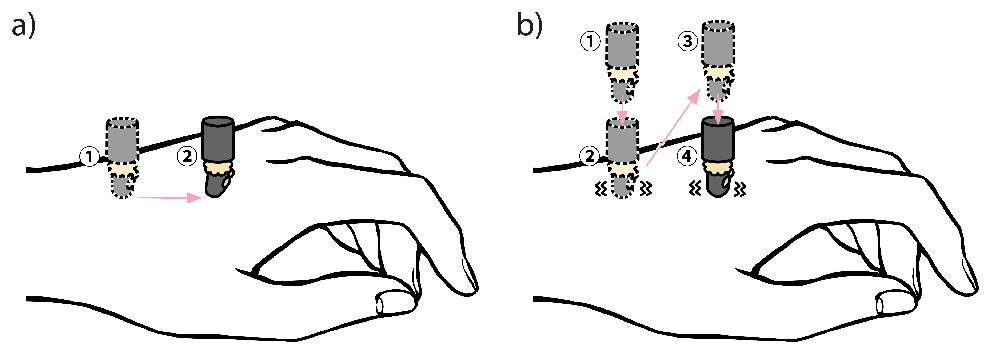
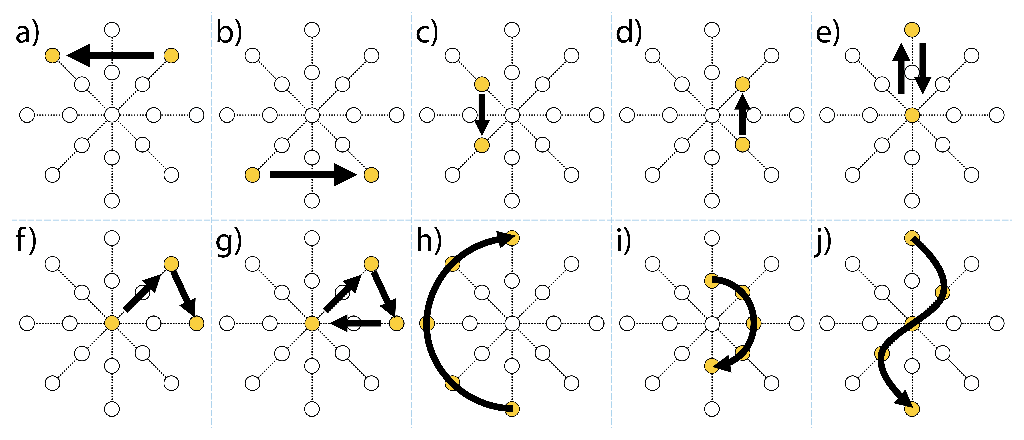
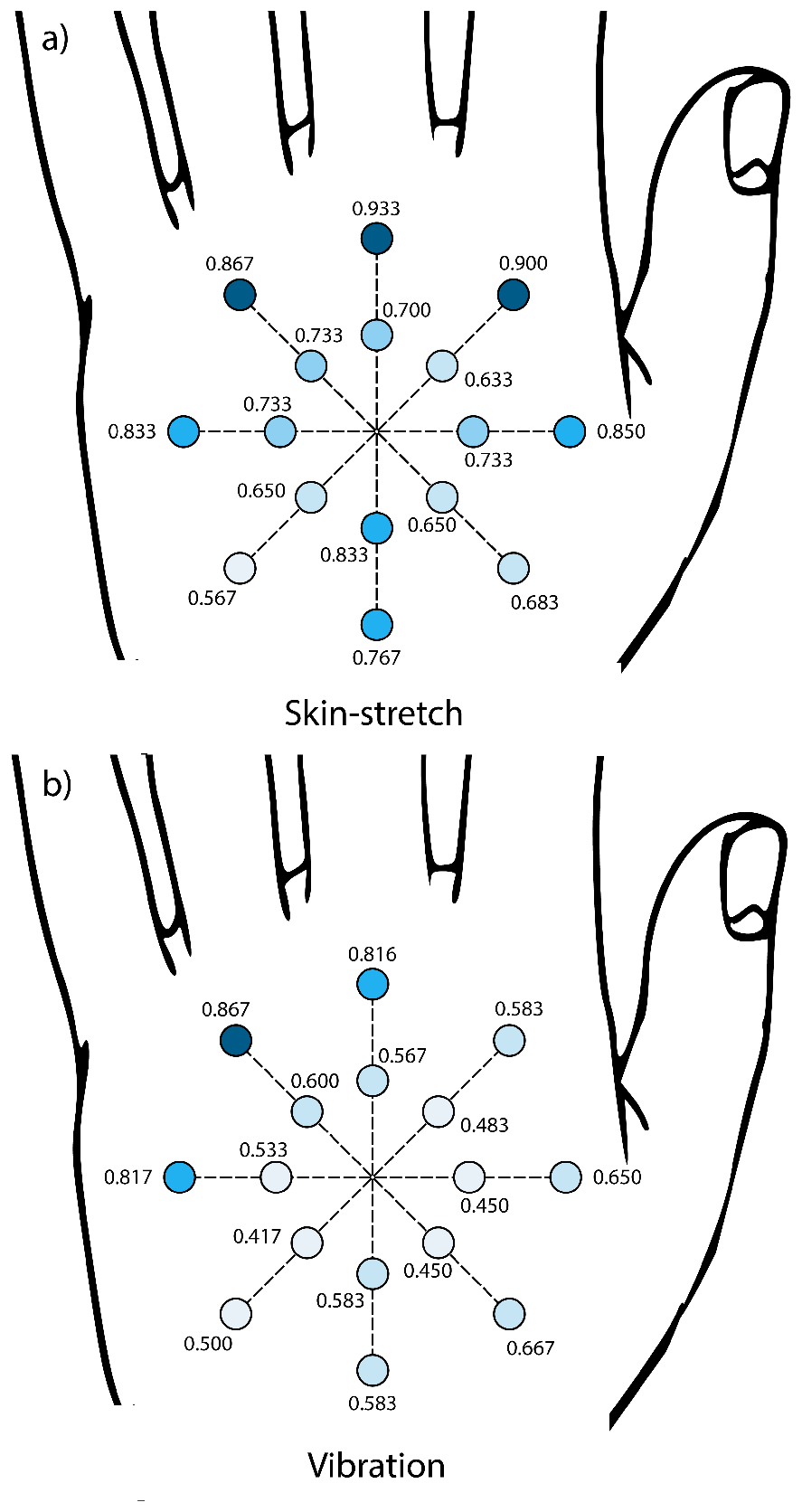
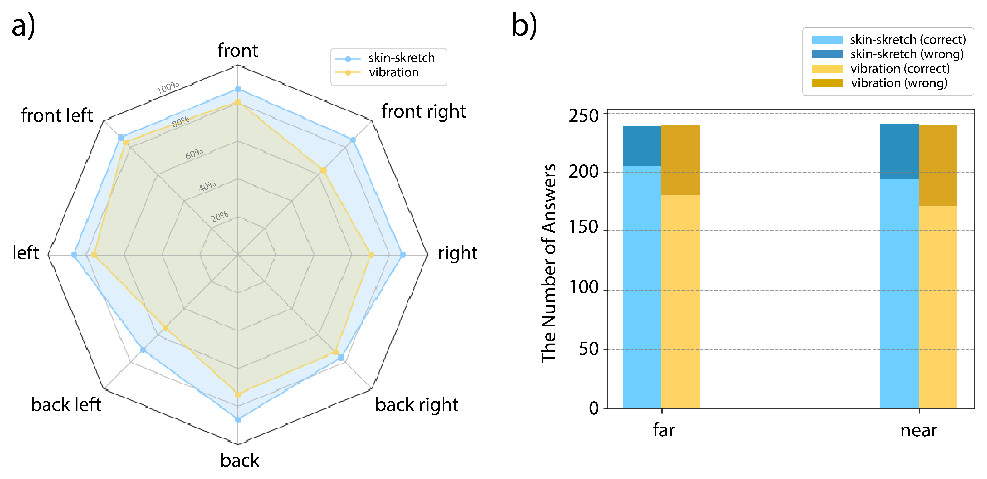
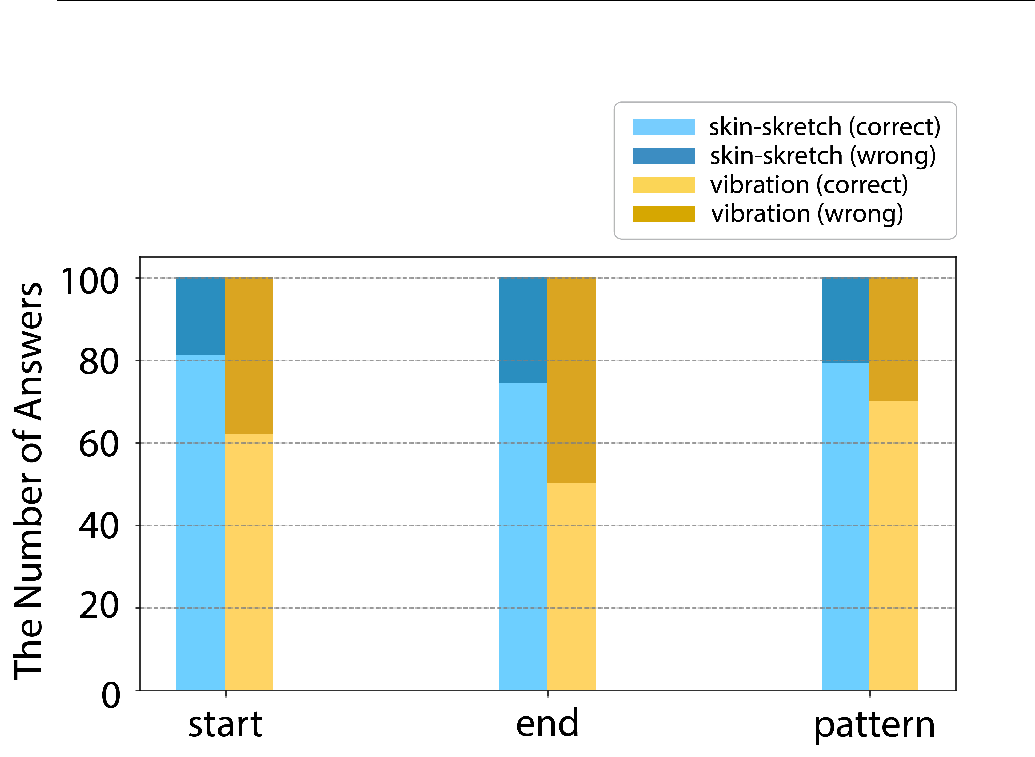
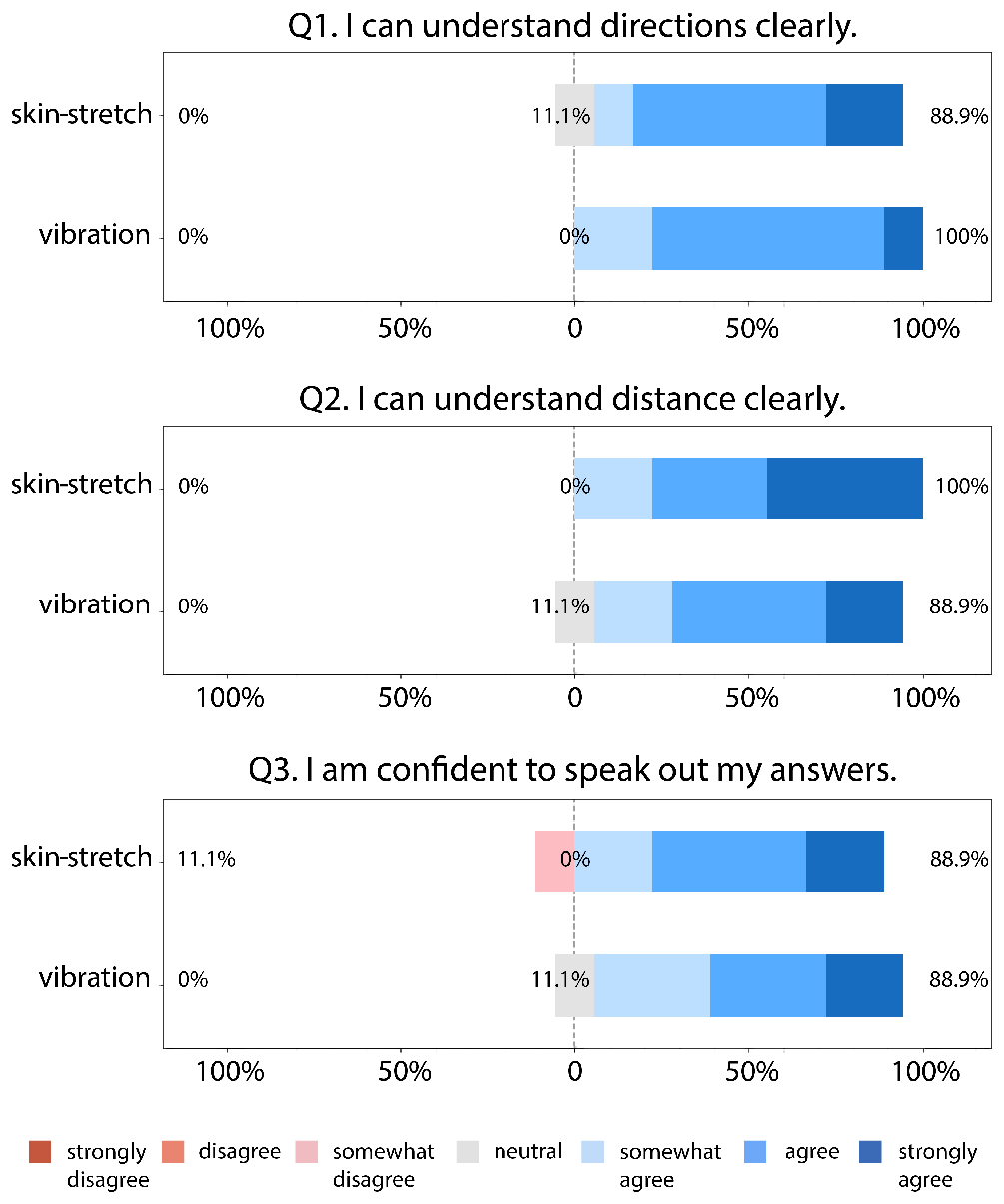
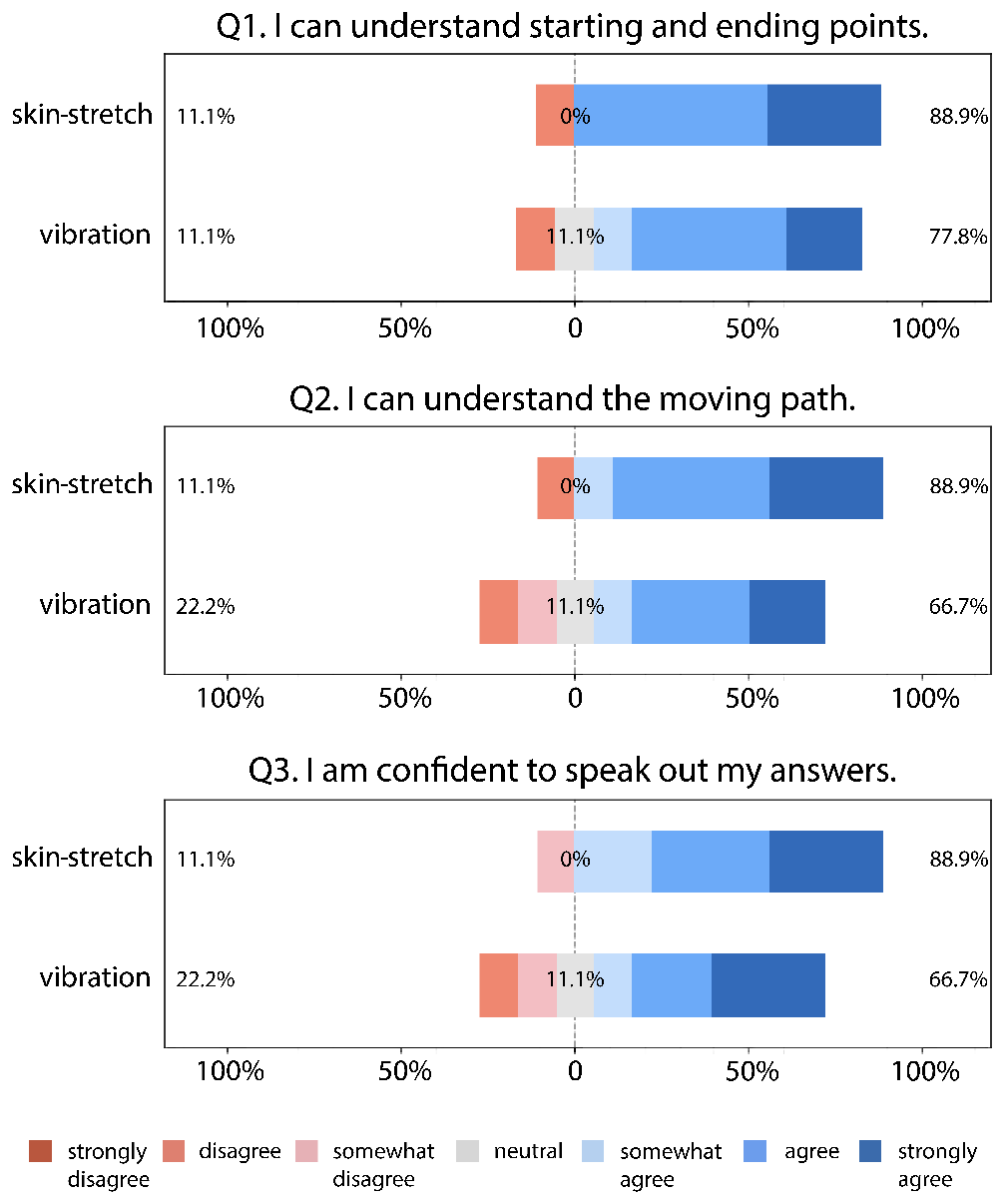
Perceiving spatial information of a virtual object (e.g., direction, distance) is critical yet challenging for blind users seeking an immersive virtual reality (VR) experience. To facilitate VR accessibility for blind users, in this paper, we investigate the effectiveness of two types of haptic cues—vibrotactile and skin-stretch cues—in conveying the spatial information of a virtual object when applied to the dorsal side of a blind user’s hand. We conducted a user study with 10 blind users to investigate how they perceive static and moving objects in VR with a custom-made haptic apparatus. Our results reveal that blind users can more accurately understand an object’s location and movement when receiving skin-stretch cues, as opposed to vibrotactile cues. We discuss the pros and cons of both types of haptic cues and conclude with design recommendations for future haptic solutions for VR accessibility.
Created by:
Jiasheng Li, Zining Zhang, Zeyu Yan, Yuhang Zhao, and Huaishu Peng
Publications:
Figures: