As Content and Layout Co-Evolve: TangibleSite for Scaffolding Blind People's Webpage Design through Multimodal Interaction
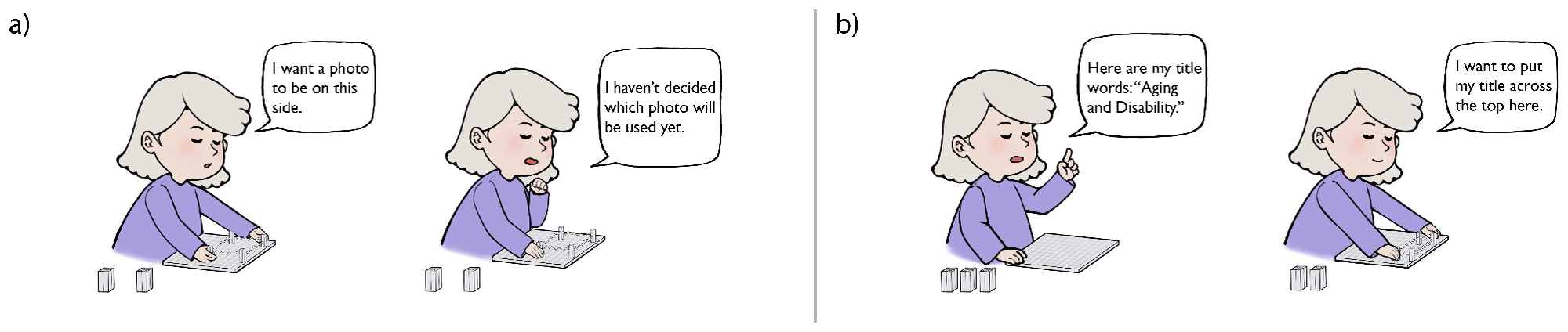
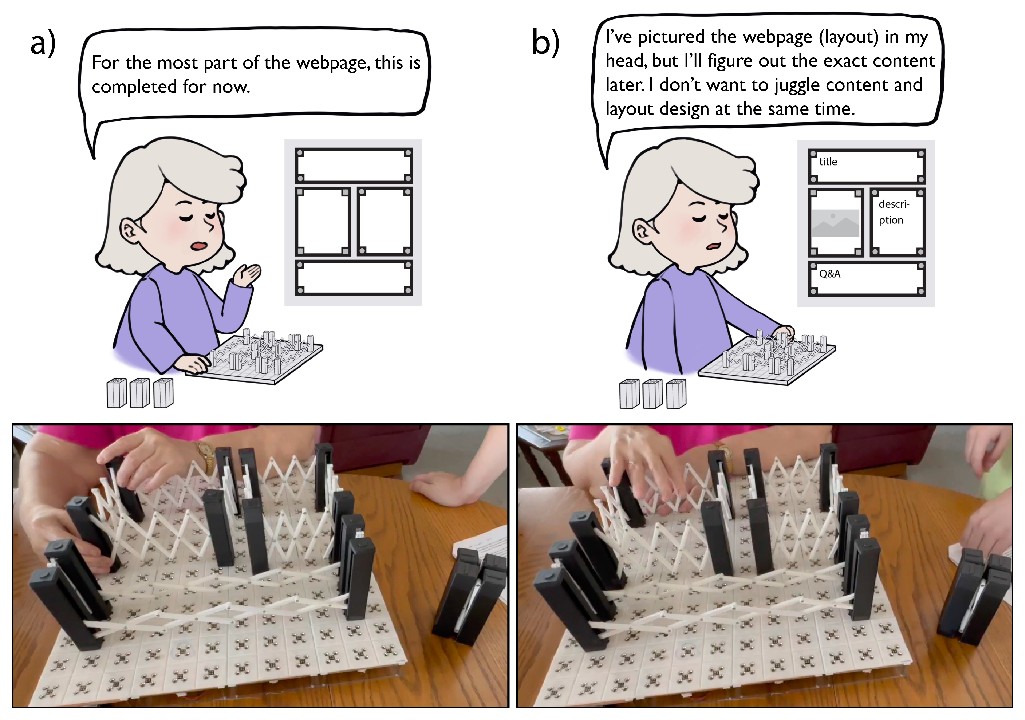
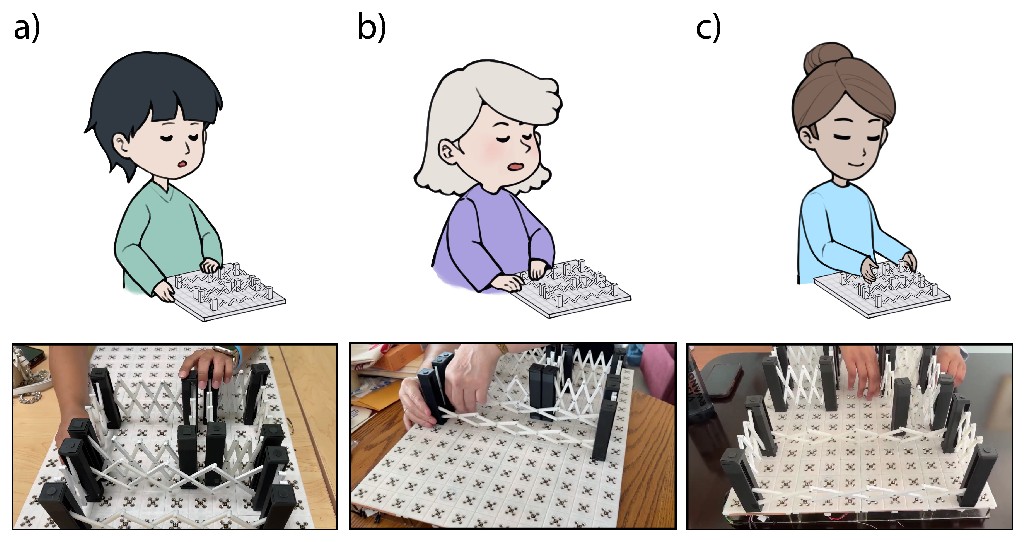
Creating webpages requires generating content and arranging layout while iteratively refining both to achieve a coherent design, a process that can be challenging for blind individuals. To understand how blind designers navigate this process, we conducted two rounds of co-design sessions with blind participants, using design probes to elicit their strategies and support needs. Our findings reveal a preference for content and layout to co-evolve, but this process requires external support through cues that situate local elements within the broader page structure as well as multimodal interactions.
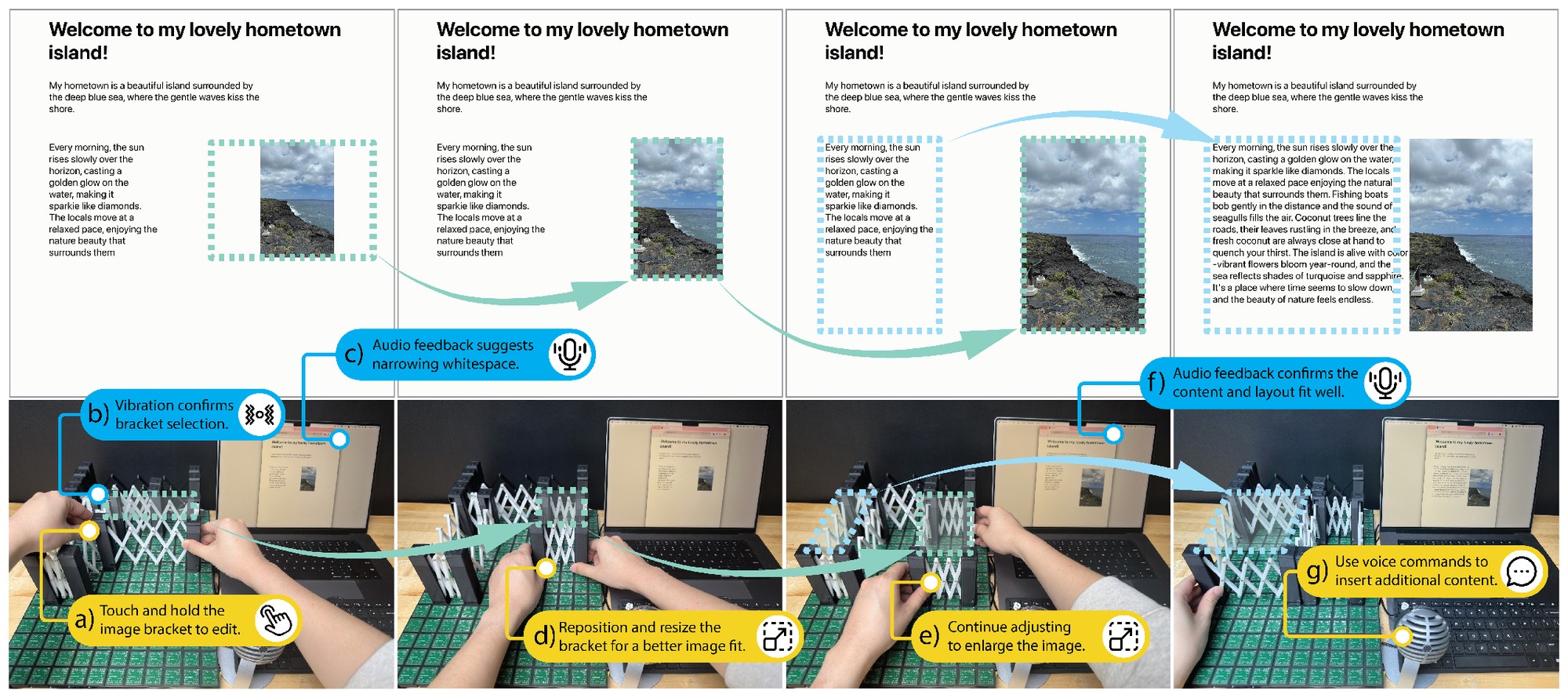
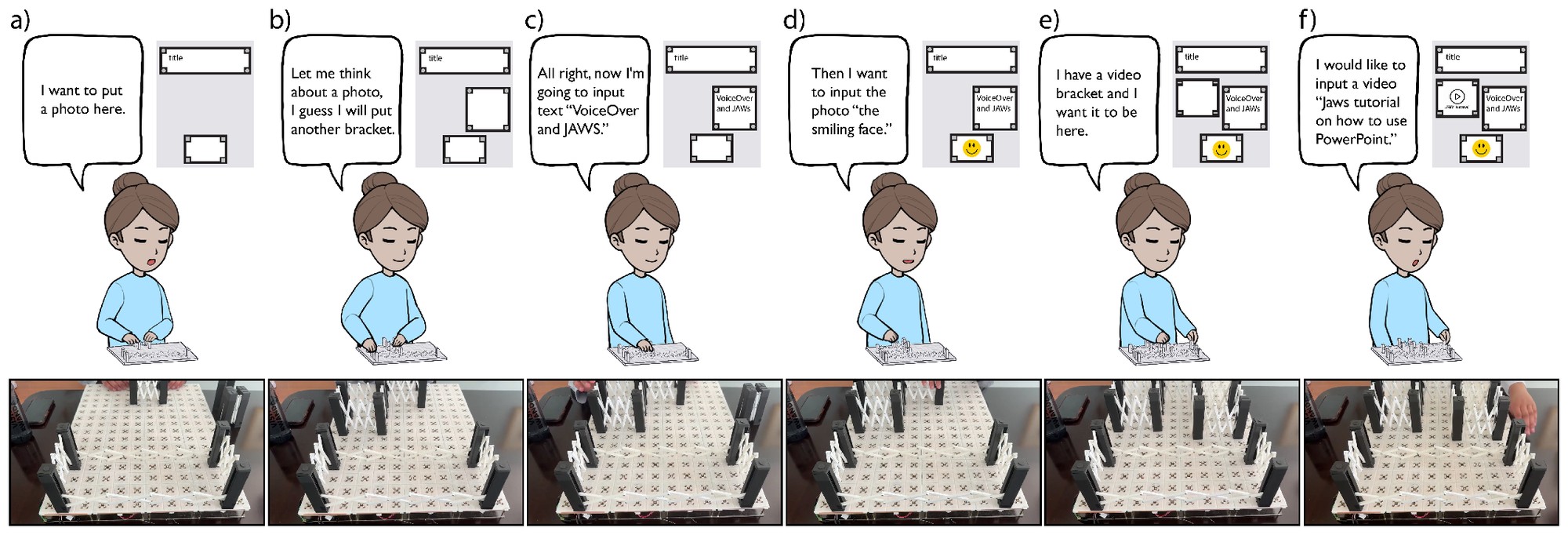
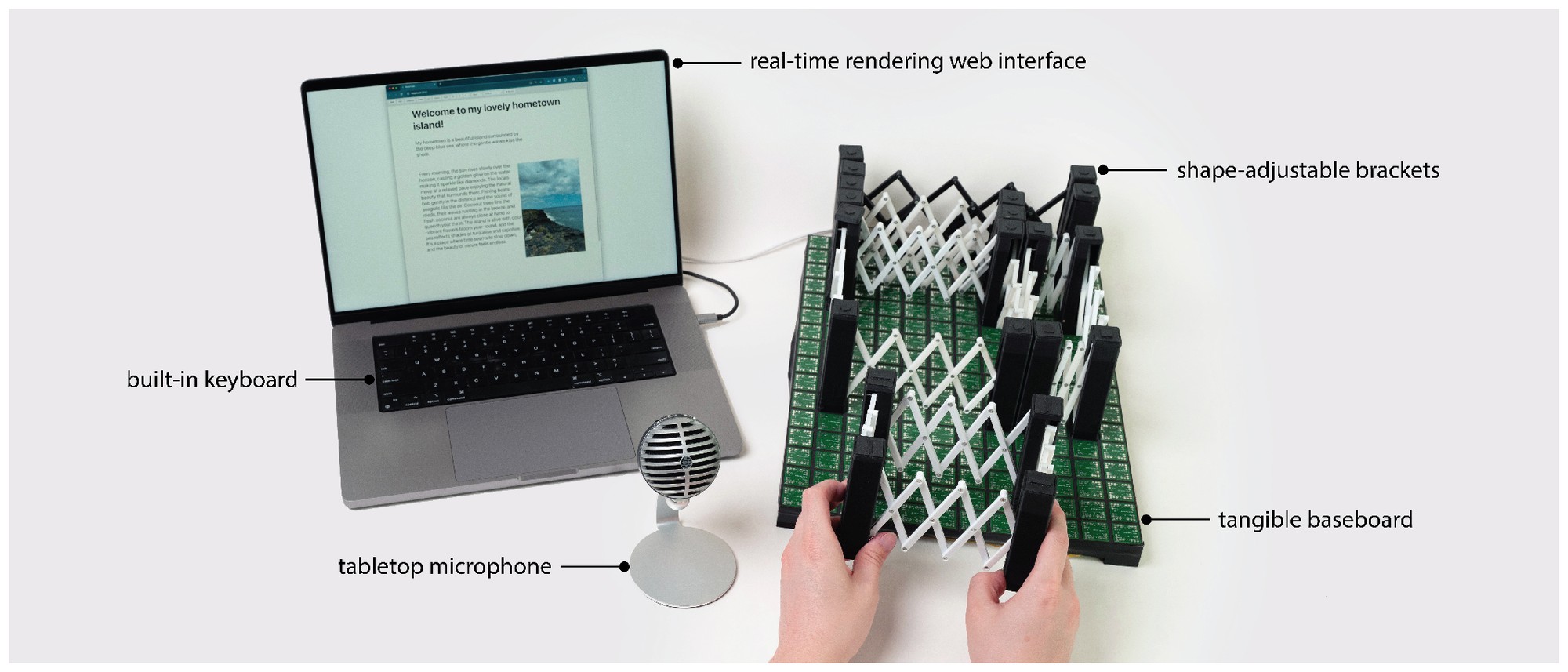
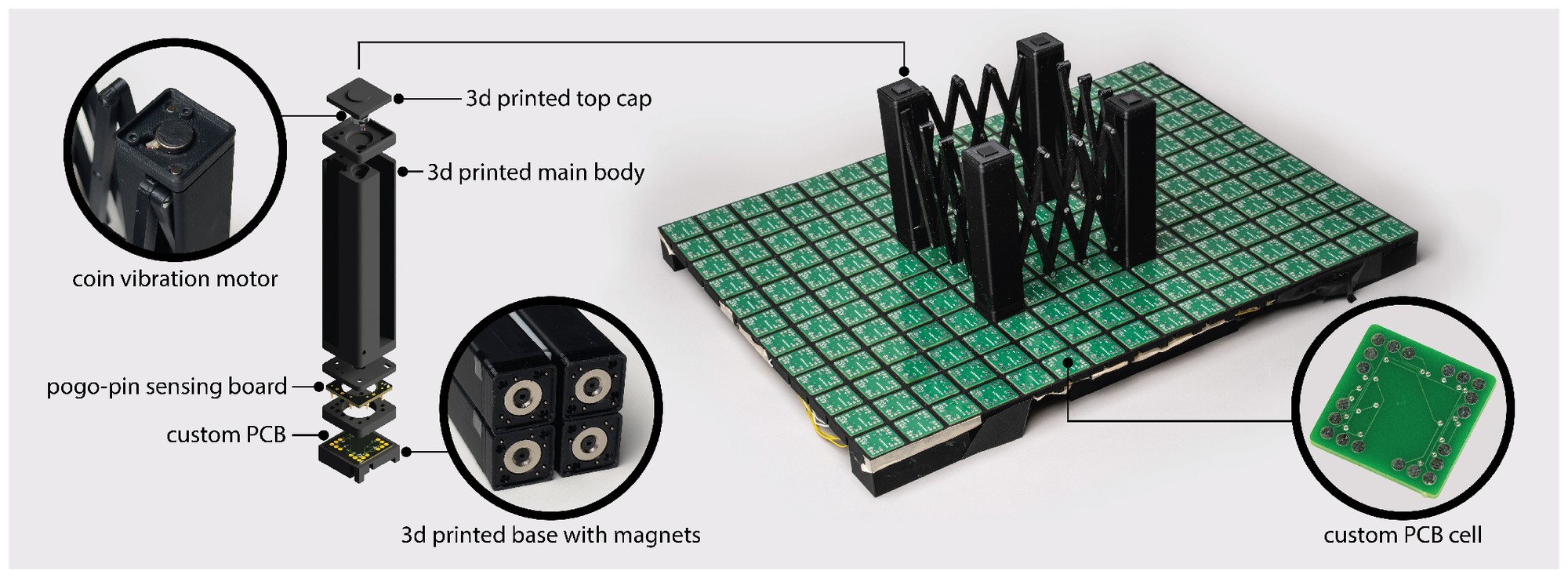
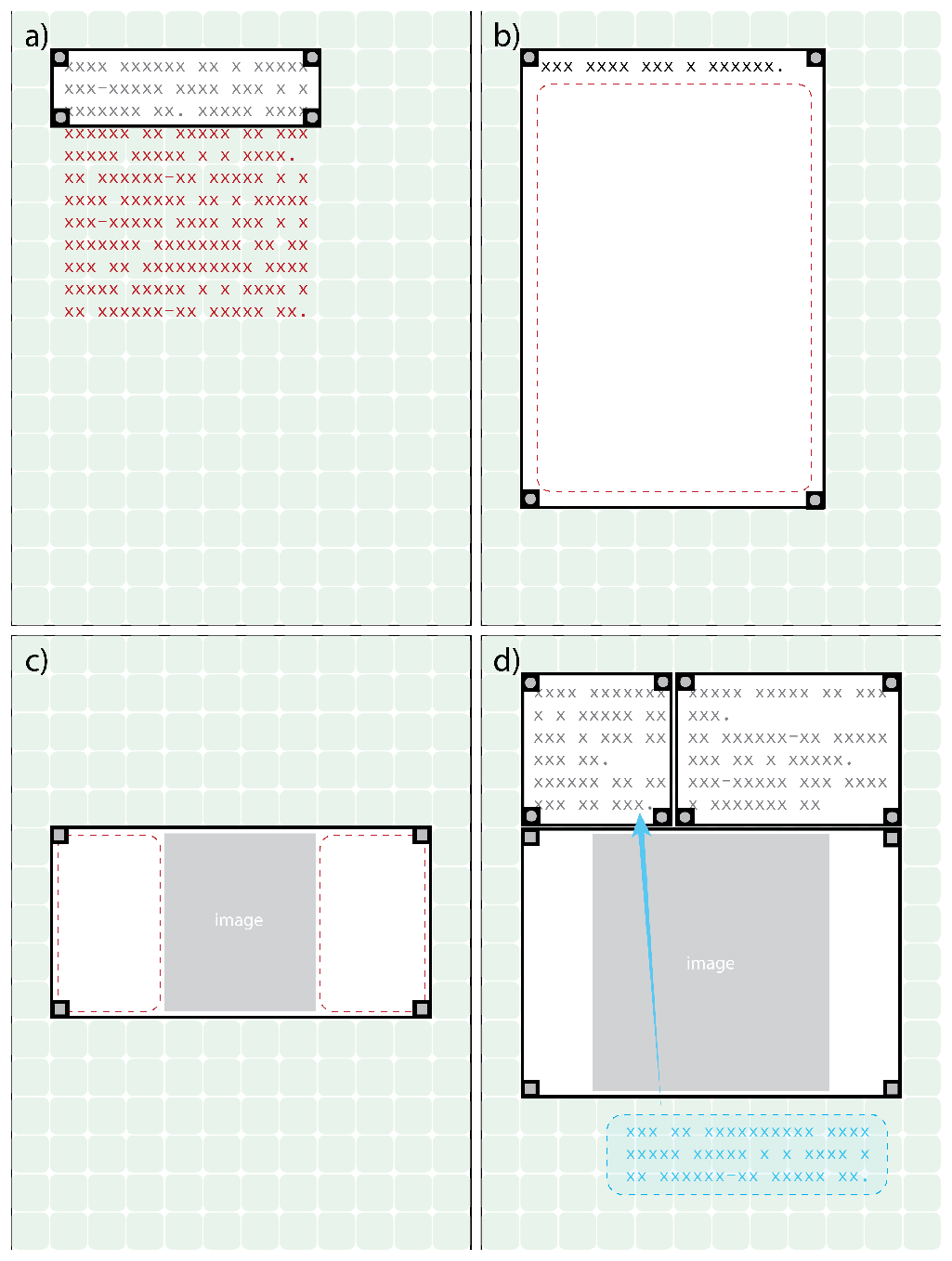
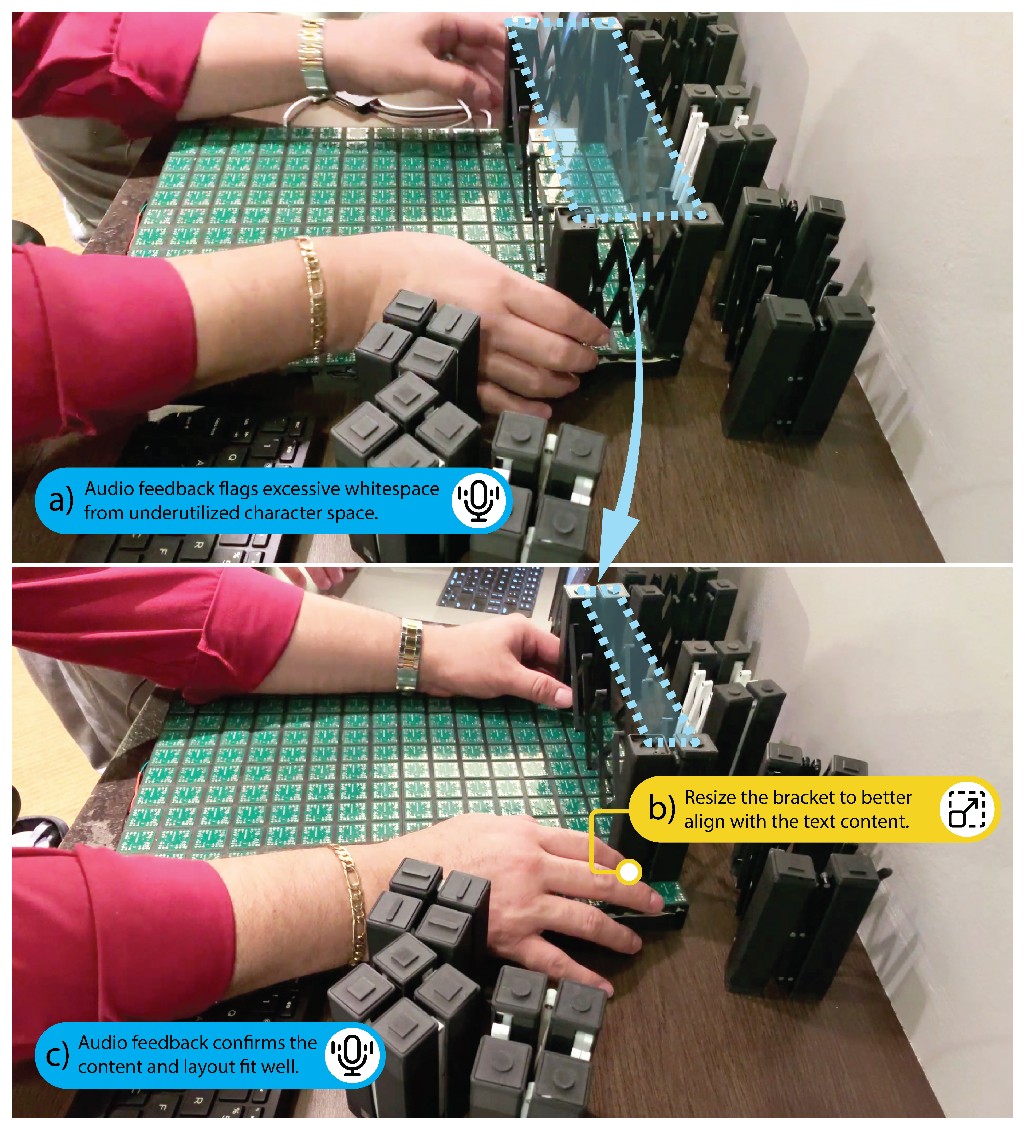
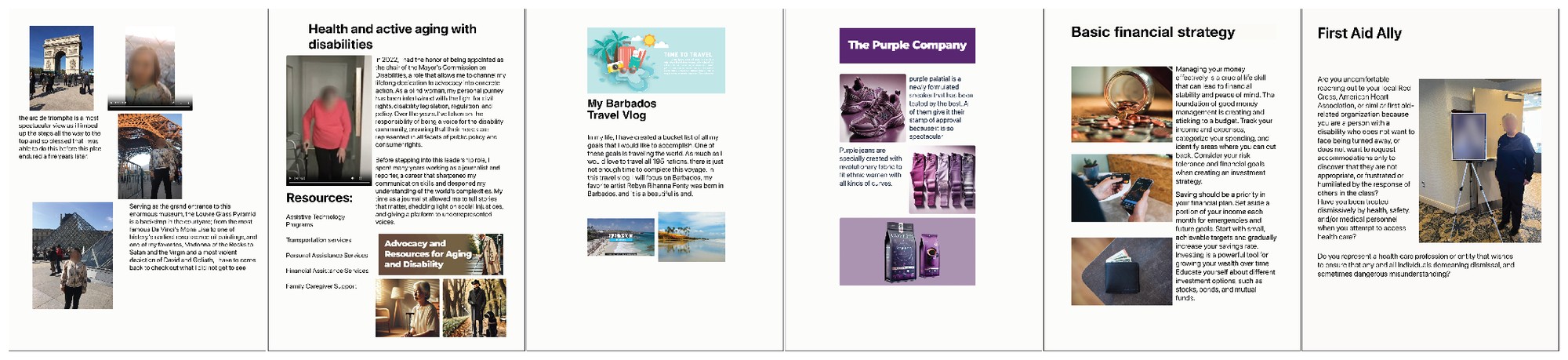
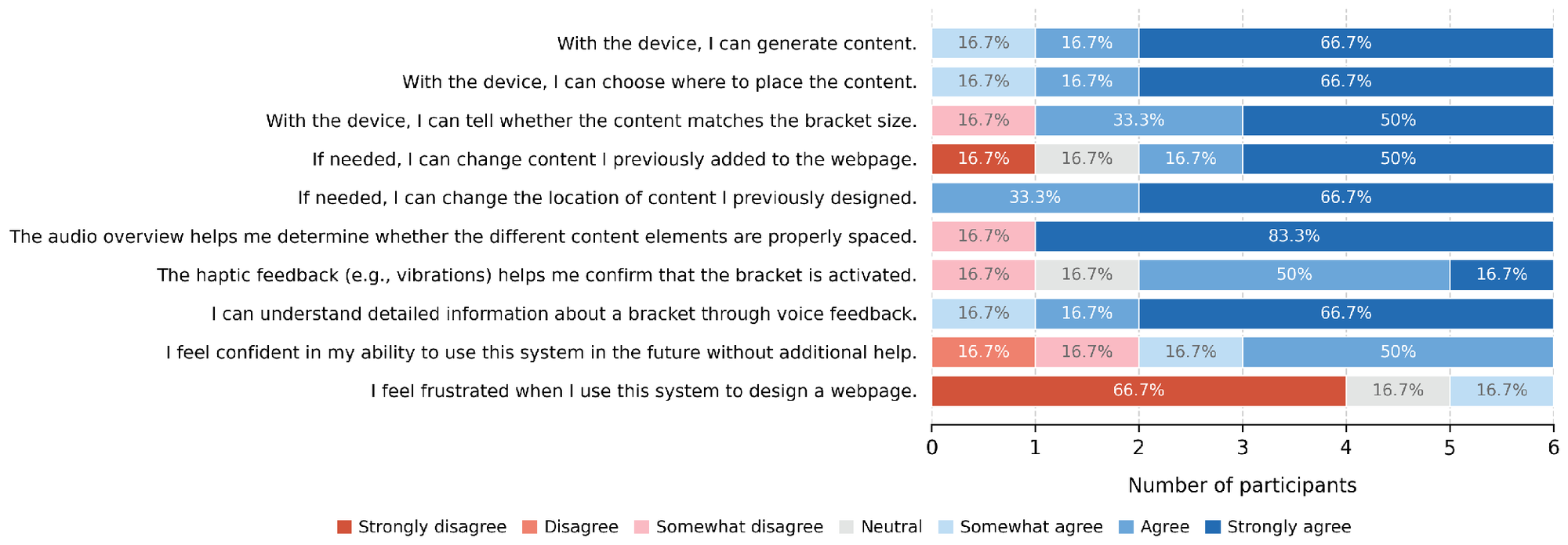
Building on these insights, we developed TangibleSite, an accessible web design tool that provides real-time multimodal feedback through tangible, auditory, and speech-based interactions. TangibleSite enables blind individuals to create, edit, and reposition webpage elements while integrating content and layout decisions. A formative evaluation with six blind participants demonstrated that TangibleSite enabled independent webpage creation, supported refinement across content and layout, and reduced barriers to achieving visually consistent designs.
Created by:
Jiasheng Li*, Zining Zhang*, Zeyu Yan, Matthew Wong, Arnav Mittal, Ge Gao*, and Huaishu Peng*
*indicates equal contribution
Publications:
Figures: