TherMosaic: Accelerating Perceived Thermal Transitions Through Spatiotemporal Thermal Feedback
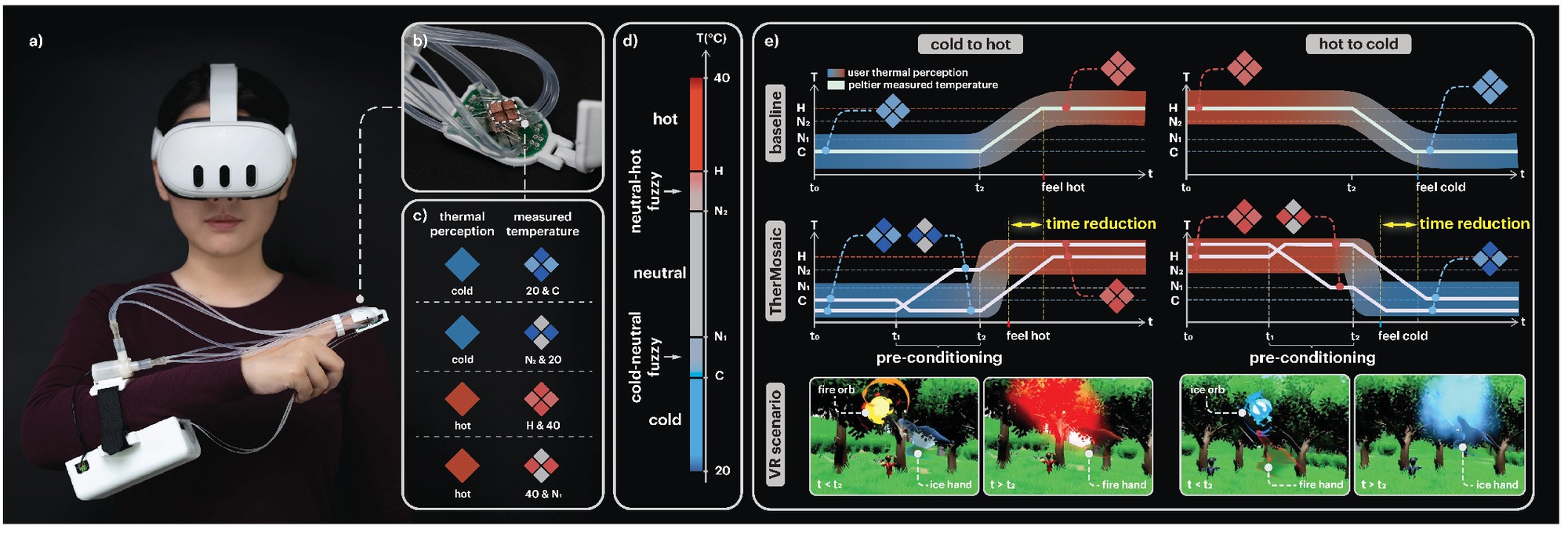
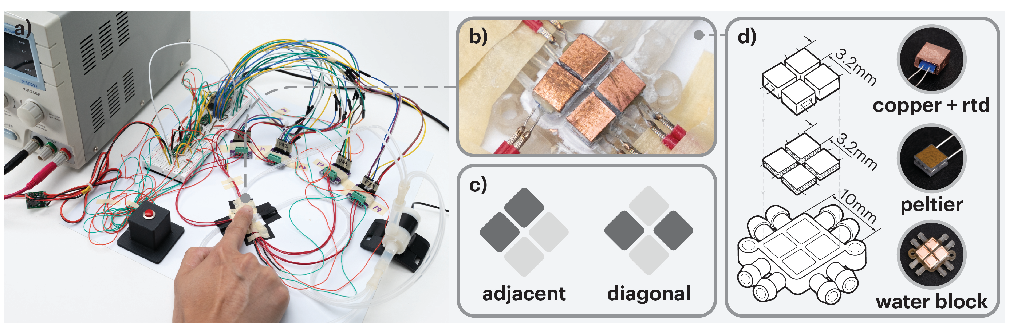
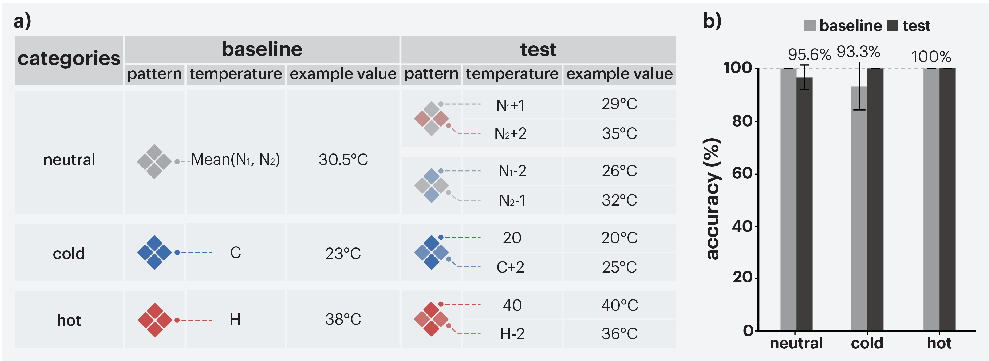
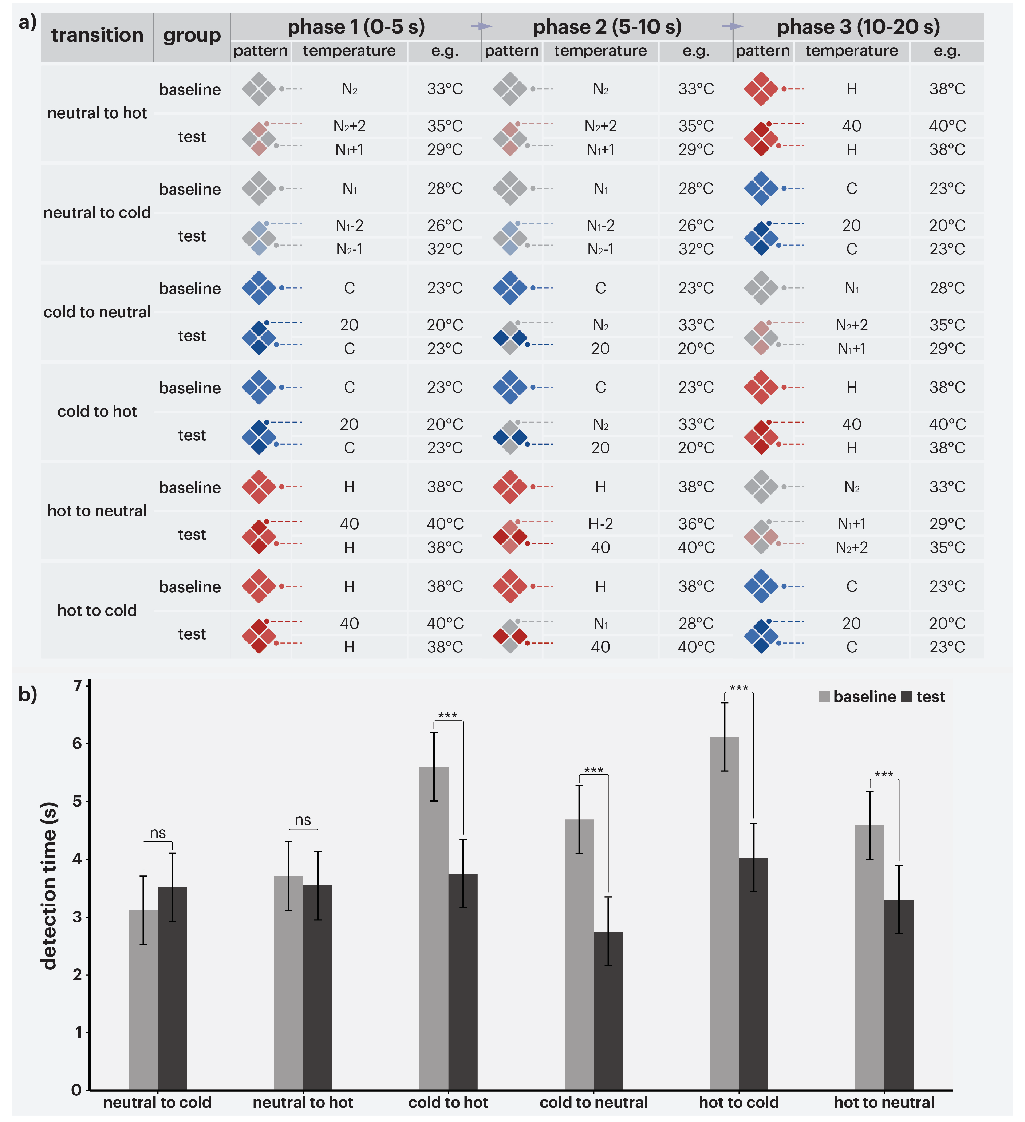
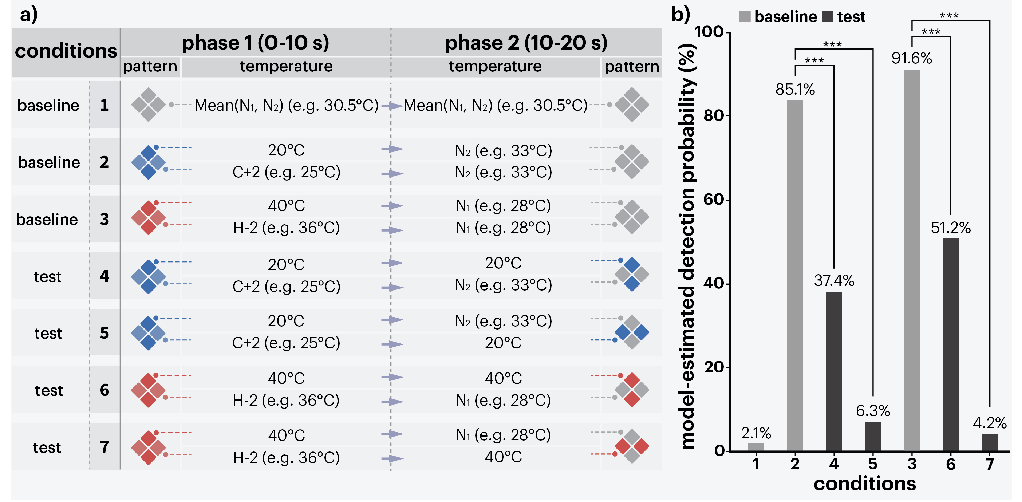
Thermal feedback can enrich immersive interaction, but thermoelectric devices often change temperature too slowly to match interactive timing. We present TherMosaic, a spatiotemporal thermal feedback approach that accelerates perceived temperature transitions by leveraging two perceptual mechanisms: spatial summation and thermal adaptation. Focusing on the fingertip, we first investigate this approach using a custom 2×2 array of independently controlled Peltier modules. Across three controlled perceptual studies, we show that distributed thermal stimulation can preserve stable hot and cold percepts despite local deviations, that adaptation helps maintain these percepts during changing stimulation, and that combining these effects reduces perceived transition time by about 30%–40% for transitions originating from hot or cold states.
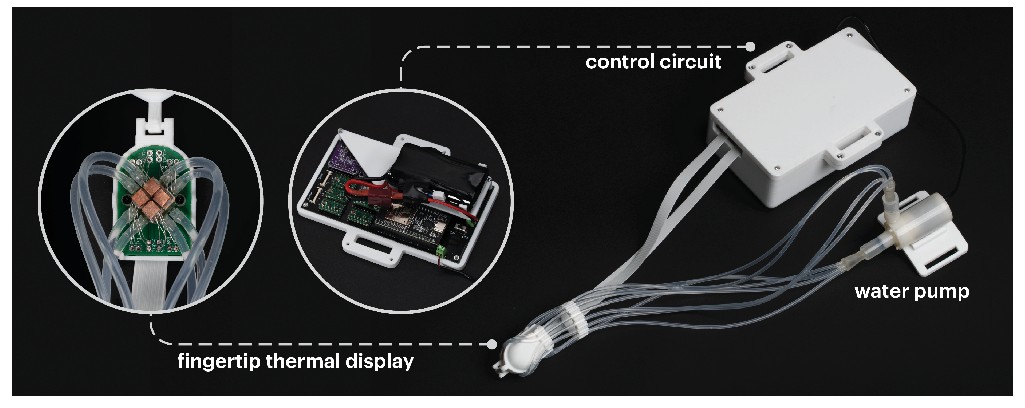
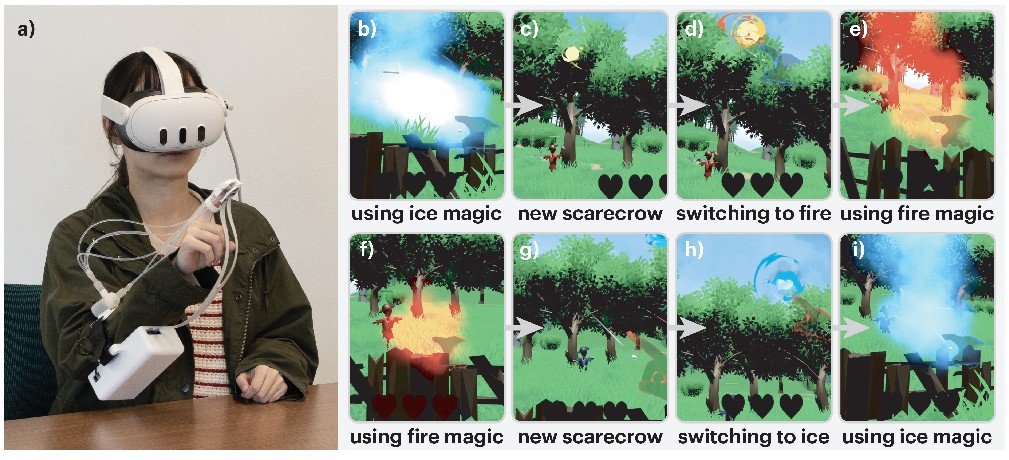
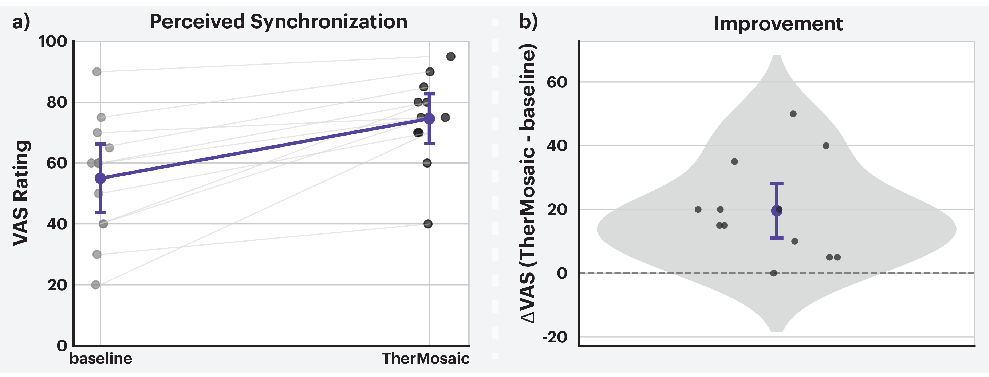
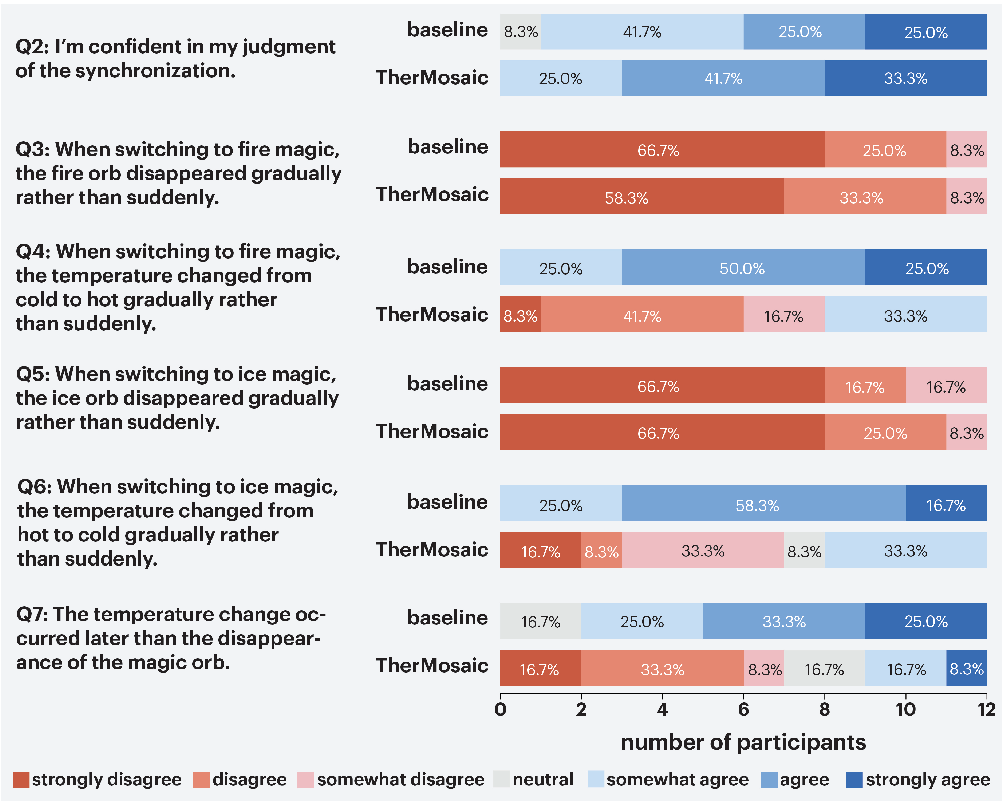
We then translate the same design principles into a standalone wearable implementation of TherMosaic and evaluate it in virtual reality. Our results show that this approach reduces perceived thermal lag and improves temporal alignment between thermal and visual events in interactive use.
Created by:
Zining Zhang, Jiasheng Li, Myungin Lee, Zeyu Yan, Jin Ryong Kim, and Huaishu Peng
Publications:
Figures: